


Medically reviewed by Dr. Arham Shabbir, PhD (Pharmacology), M.Phil (Pharmacology), B.Pharm (RPh)
Written by Dr. Muhammad Imran, M.Phil, PharmD, BSc
Updated on
Table of Contents
Polycystic ovary syndrome (PCOS) is a common hormone problem in women. It causes higher levels of male hormones, which can lead to irregular periods, trouble getting pregnant, extra hair on the face or body, and acne .
A study by Damoulaki et al., 2025 stated that hyperandrogenism and insulin resistance synergistically increase sebum production and follicular keratinisation, explaining why acne in PCOS is often persistent and cystic.
Around 10–13% of women of childbearing age have PCOS. However, up to 70% of them do not know they have it.

Decoding the Ovarian Dermal Axis: How Hyperandrogenism Rewires Skin Architecture
Excess androgens stimulate sebaceous glands, thickening sebum and altering its lipid profile.
Sebum composition changes make pores more prone to blockage.
The Hyper-Androgen Cascade: Transforming Sebum Composition
In a healthy body, the ovaries and adrenal glands produce only tiny amounts of male hormones like testosterone. But in PCOS, high levels of luteinizing hormone (LH) upset this balance and cause the ovaries to overproduce androgens. These extra hormones act like a dial turned way up on the skin’s oil glands.
As a result, the glands pump out large amounts of thick, waxy sebum. This heavy oil lacks enough linoleic acid, which normally protects the skin, so it irritates hair follicles and easily clogs pores.
Insulin Resistance and IGF‑1 Amplification
- In addition to excess androgens, many people experience systemic insulin resistance, which is a metabolic issue which affects up to 70–80% of women with PCOS.
- Normally, insulin helps cells absorb sugar from the blood. But when cells stop responding properly, the pancreas makes extra insulin to try to force the sugar in. This flood of excess insulin then tells the liver to produce more of a substance called IGF-1(Insulin-like Growth Factor 1 ).
- High IGF-1 speeds up activity in the skin’s oil-producing units, making them even more overactive and prone to clogging.
The Clinical Triad: Mapping Acne and PCOS Symptoms
- Recognizing the exact physical presentations of acne and pcos symptoms helps differentiate systemic, internally driven conditions from standard teenage or hygiene-related breakouts.
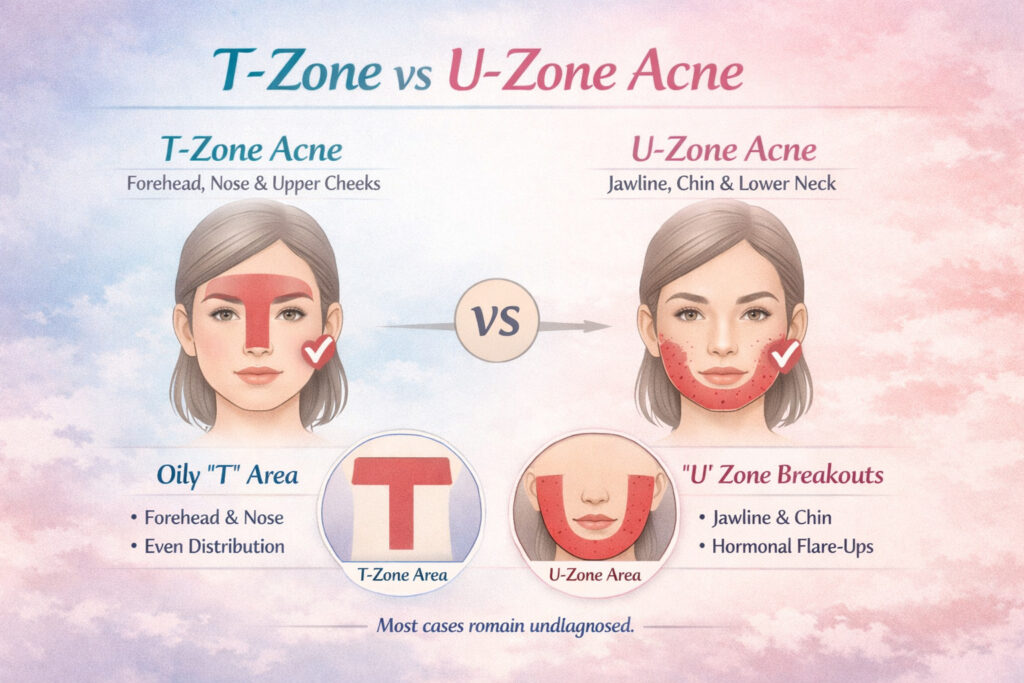
The "U-Zone" Blueprint: Why Hormonal Acne Dominates the Jawline and Chin
- Standard bacterial acne usually appears evenly across the high‑sebaceous “T‑zone” the forehead, nose, and upper cheeks. In contrast, hormonal acne and PCOS‑related breakouts follow a distinct pattern known as the “U‑zone.”
- Here, blemishes cluster along the lower third of the face, wrapping around the jawline, chin, and upper neck. The hair follicles in this region have a naturally higher density of androgen receptors, making them especially sensitive to even small hormonal fluctuations.
PCOS Chin Hair and Acne: The Dual Manifestation of Hirsutism
- When elevated androgens interact with facial hair follicles, they trigger two parallel effects overactive oil secretion and structural changes in the hair itself. This dual mechanism explains why PCOS related chin hair and acne often appear together during clinical assessment.
- As excess testosterone reaches the lower jaw, it transforms fine vellus hairs into thick, coarse terminal hairs, a process known as hirsutism. When these thicker hairs attempt to emerge through follicles already narrowed by dense sebum and trapped skin cells, they can break or become lodged, provoking painful inflammatory reactions that mimic or intensify cystic acne lesions.
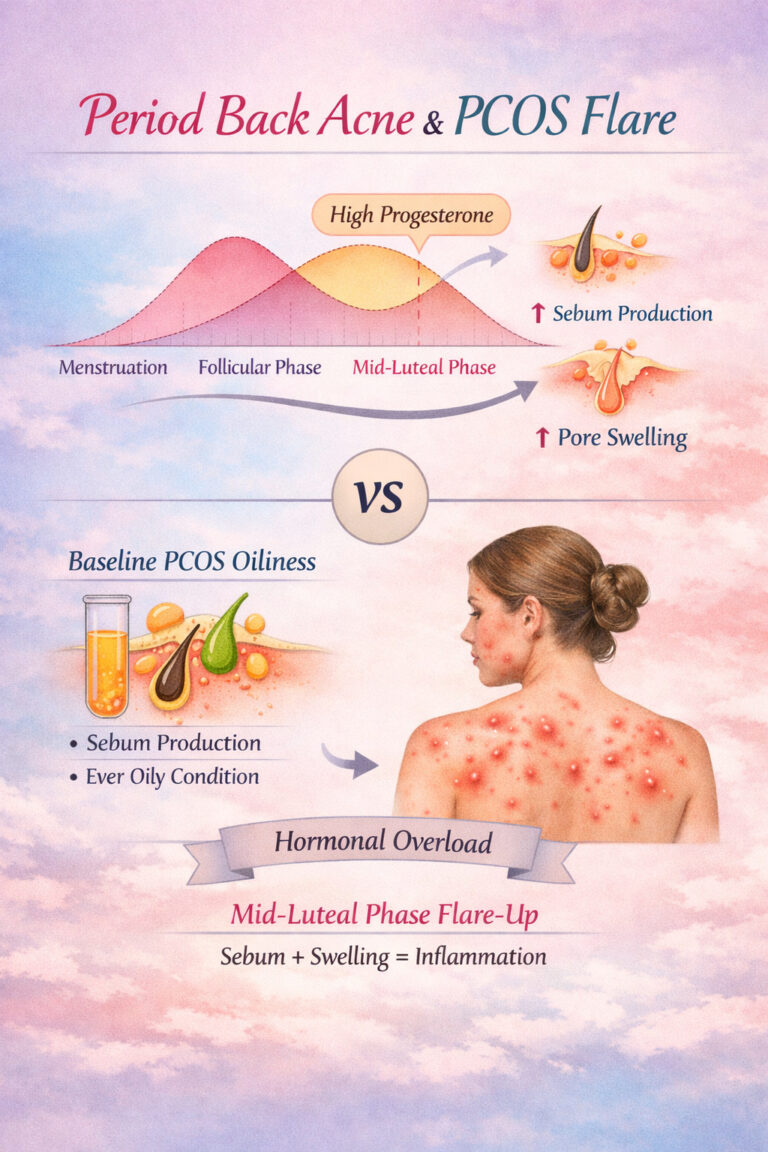
Period Back Acne and PCOS: Managing the Luteal Phase Flare
- Many people find that their skin symptoms extend beyond the face, with severe period back acne and PCOS flares that follow the rhythm of their menstrual cycle.
- During the mid‑luteal phase : the week before a period , progesterone levels rise sharply. This hormone not only boosts sebum production but also causes subtle swelling around the pore opening, narrowing the exit route for skin oils. When this natural luteal surge overlaps with the baseline oiliness driven by PCOS, it often triggers painful breakouts across the upper back, shoulders, and chest.
Severe Presentations: The Pathophysiology of Cystic Acne and PCOS
When these endocrine disruptions go unmanaged, common surface blemishes can quickly evolve into severe structural issues deep within the skin.
Deconstructing Macrocomedones and Deep-Tissue Nodules
- Unlike ordinary surface whiteheads, cystic acne and PCOS related lesions form as deep, painful, fluid‑filled nodules beneath the skin’s surface.
- Because the follicle becomes blocked far below the epidermis by thick, sticky sebum, the oil gland continues to secrete behind the obstruction.
- This ongoing buildup increases internal pressure until the follicle wall ruptures deep within the dermis, releasing inflammatory debris into surrounding tissue. The result is painful, long‑lasting cysts with a high risk of permanent scarring.

The Overgrowth Matrix of Cutibacterium acnes
This trapped, low-oxygen pool of thick sebum forms an ideal environment for Cutibacterium acnes (C. acnes), a normal skin bacterium that thrives in anaerobic spaces.
As these bacteria multiply rapidly within the clogged pore, they secrete irritating fatty acids that trigger a powerful local immune response, turning a simple clogged pore into a swollen, painful blemish.
How to Treat PCOS Acne: A Comprehensive Pharmacological Framework
Because the underlying driver of this condition is a systemic endocrine imbalance, standard over-the-counter acne washes usually provide limited relief on their own. Successfully managing the condition requires targeted treatments designed to regulate your hormones from the inside out.
First-Line Endocrine Interventions: Combined Oral Contraceptives
To lower elevated androgen levels at their source, medical providers frequently prescribe specific combination oral birth control pills containing both ethinyl estradiol and a low-risk progestin.
These combination therapies work by modernizing ovulation cycles and increasing the liver’s production of Sex Hormone-Binding Globulin (SHBG). The increased SHBG acts like a chemical sponge, soaking up excess free testosterone in the blood so it can no longer interact with your skin’s oil glands. Clinical data shows a 30% to 60% reduction in inflammatory acne lesions within three to six months of starting therapy.
Peripheral Androgen Blockade: The Role of Spironolactone
When birth control pills alone aren’t enough to manage persistent jawline breakouts, clinicians often introduce spironolactone. Originally developed as a blood pressure medication, this potassium-sparing diuretic acts as a powerful anti-androgen at higher doses. It binds directly to the androgen receptors inside your sebaceous glands, blocking circulating testosterone from locking into the receptor and triggering oil production.
Metabolic Resensitisation: Metformin and Adjuvant Retinoids
If metabolic assessments confirm that insulin resistance is driving your symptoms, introducing insulin-sensitizing medications like metformin can provide significant therapeutic benefits. By helping body cells respond normally to insulin, metformin safely lowers overall circulating insulin and IGF-1 levels, turning down the cellular pathways that stimulate excessive sebum production and skin cell accumulation.
To support these internal therapies, incorporating prescription-strength topical retinoids (like tretinoin or adapalene) helps normalize skin cell shedding inside the pore, ensuring new sebum can flow out smoothly without forming blockages.
Frequently Asked Clinical Questions (FAQ)
Why does my hormonal acne worsen even when my blood testosterone tests return normal?
Standard blood draws only measure circulating hormone levels, missing how active your hormones are locally within the skin tissue. Many individuals with PCOS possess highly sensitive androgen receptors or overactive local enzymes (like 5-alpha-reductase) inside their hair follicles, causing severe oil production and breakouts even when systemic blood levels appear within normal ranges.
Can lifestyle modifications alone cure cystic PCOS acne?
While dietary adjustments:such as prioritizing low-glycemic foods to manage insulin spikes,help lower overall system inflammation and reduce breakout frequency, they are rarely enough to completely stop severe cystic acne on their own. Long-term clearance typically requires a combined approach that pairs lifestyle modifications with targeted hormonal treatments.
How long does it take to see visible skin improvements once starting an internal hormone-balancing regimen?
Hormonal balances and skin cell renewal cycles adjust gradually over time. Because treatments must reset deep cellular behaviors inside the hair follicle, patients should anticipate a baseline of three to six months of consistent treatment before seeing a significant reduction in deep cystic lesions.
Refrences
Damoulaki E, Sioutis D, Sarli V, et al. (November 29, 2025) Polycystic Ovary Syndrome-Associated Acne: The Interplay of Hyperandrogenism, Insulin Resistance, and Therapeutic Strategies. Cureus 17(11): e98103. doi:10.7759/cureus.98103
Leung, A. K., Barankin, B., Lam, J. M., Leong, K. F., & Hon, K. L. (2021). Dermatology: How to manage acne vulgaris. Drugs in Context, 10, 1–18.https://doi.org/10.7573/dic.2021-8-6.
Visser, W. I., Abeysuriya, S., Altaf, H., Baker, S. J., & Todd, G. (2025). Dermocosmetics in acne vulgaris: South African consensus recommendations with a focus on skin of color. Journal of Cosmetic Dermatology, 24(1), e16369.https://doi.org/10.1111/jocd.70696