

Medically reviewed by Dr. Rao Khurram Ayoub, RPh, PhD (Pharmaceutics)
Written by Dr. Muhammad Imran, M.Phil, PharmD, BSc
Updated on
Table of Contents
What vitamin D deficiency means in women
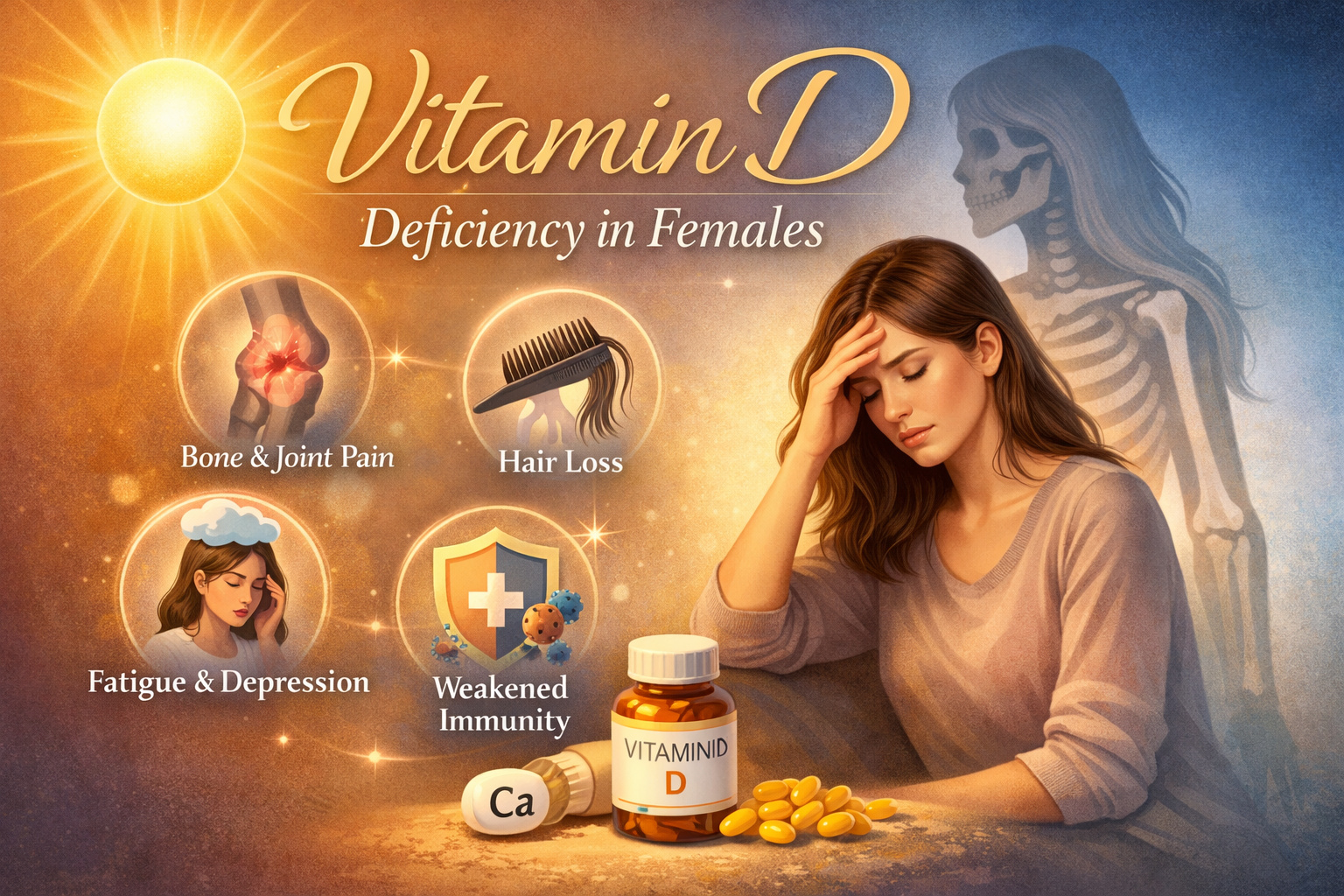
Vitamin D deficiency in females means the body does not have enough vitamin D to support bones, muscles, and overall health.
The Core Physical Signs: Mapping Low Vitamin D Across the Female Body
When your internal cholecalciferol reserves drop, your entire physical frame suffers from the lack of metabolic support. Let us break down the primary head-to-toe warning signals that your body uses to flash a clear distress light.
Chronic Fatigue and Low Energy Stalls
If you are constantly fighting severe afternoon exhaustion despite sleeping well, your cells might lack vital nutrient support. Low vitamin d symptoms in women fatigue states stem from a direct loss of mitochondrial energy production within your active muscle tissue pools.
A study by Roy et al., 2014 stated that vitamin D supplementation significantly improves fatigue symptoms in patients with documented deficiency by optimizing muscle mitochondrial oxidative phosphorylation.
Diffuse Musculoskeletal Strain: Joint Laxity and Female Bone Pain
Without adequate cholecalciferol, your digestive tract simply cannot absorb the calcium needed to keep your skeletal frame strong. Experiencing severe vitamin d deficiency symptoms female bone pain and persistent low vitamin d and joint pain in females occurs because your body leeches its mineral reserves to maintain blood stability. A study by Knutsen et al., 2010 stated that severe vitamin D deficiency is a major, frequently overlooked cause of diffuse musculoskeletal pain and deep bone discomfort in female populations.
Life-Stage Variations: How Age and Hormones Alter Depletion Signals
Your body’s nutritional requirements naturally evolve as you cross different physiological milestones. Let us look at how age alters the specific ways your body alerts you to a hidden drop in tissue reserves.
The Early Years: Preventative Health in Young Women
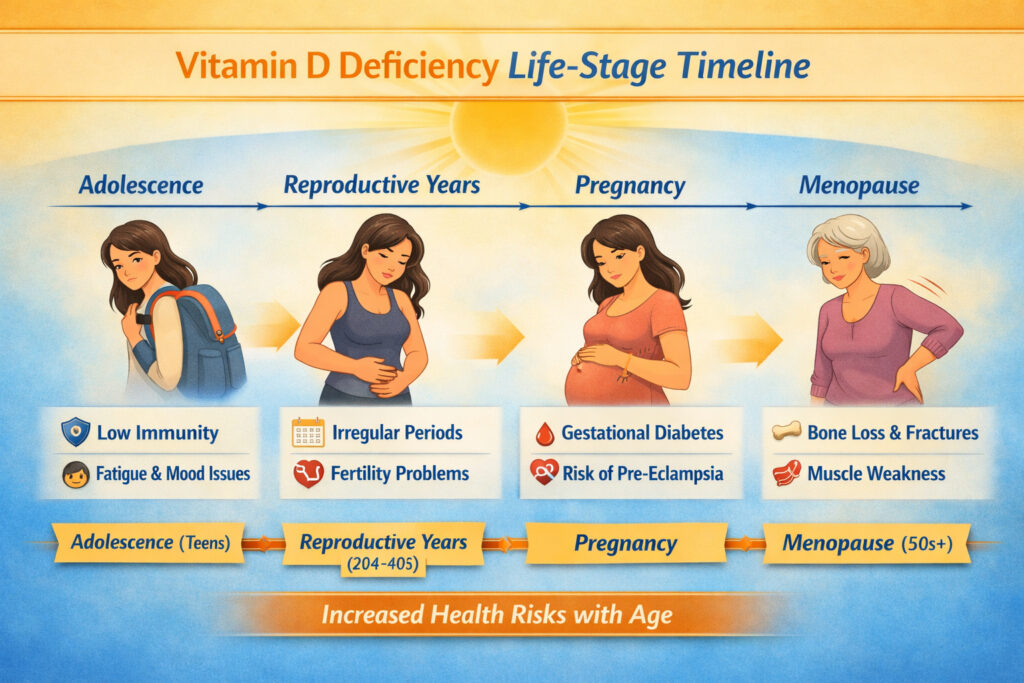
Younger populations often dismiss subtle immune drops or persistent low moods as basic workplace stress. Spotting early vitamin d deficiency symptoms in young women helps prevent future drops in peak bone mass during these highly critical reproductive years.
A study by Al-Faris, 2016 stated that a shockingly high prevalence of vitamin D deficiency exists among young college-aged females, negatively impacting their long-term bone development and immune health.
The Perimenopause and Menopause Transition (Over 50)
When your natural estrogen levels begin to fluctuate, your bones lose their primary hormonal shield. Identifying clear signs of low vitamin d in women over 50 and managing low vitamin d symptoms perimenopause is essential to prevent rapid bone mineral density losses.
A study by Lerchbaum, 2014 stated that vitamin D status interacts directly with declining ovarian hormones during perimenopause, making adequate levels crucial for preventing rapid skeletal degradation.
Post-Menopause and Longevity Frameworks (Over 60)
As we age, our skin naturally loses its innate biological ability to synthesise nutrients from sunlight. Monitoring specific vitamin d deficiency symptoms in females over 60 protects structural stability and lowers the risk of unexpected fractures or sudden muscle weakness.
A study by Gallagher, 2013 stated that aging significantly reduces the efficiency of skin vitamin D synthesis, creating a strict requirement for targeted supplementation to preserve balance and bone strength in elderly women.
Reproductive Health, Pregnancy, and Endocrine Overlaps
Because cholecalciferol acts as a master pro-hormone, its systemic presence directly influences your delicate reproductive pathways and endocrine loops.
Maternal Depletion: Pregnancy and Breastfeeding Safeguards
Growing a new life places massive physical demands on your internal nutritional stores. Screening for clear signs of low vitamin d during pregnancy and watching for vitamin d deficiency signs in breastfeeding mothers ensures both maternal health and safe infant development.
A study by Brummelte et al., 2017 stated that maintaining optimal maternal vitamin D levels is critical during pregnancy and lactation to prevent adverse neonatal outcomes and post-partum maternal depletion.
Metabolic Stalls: PCOS and Sudden Weight Gain
If you find yourself gaining weight despite following a balanced diet, your metabolic signaling pathways might be struggling. Connecting vitamin d deficiency symptoms in women weight gain to complex pcos and vitamin d deficiency symptoms shows how this nutrient directly modulates cellular insulin sensitivity.
A study by Thomson et al., 2012 stated that vitamin D deficiency is highly prevalent in women with PCOS, and its correction helps improve insulin resistance and manage metabolic weight gain.
Menstrual Health: Ovarian Signaling and Irregular Cycles
An irregular cycle is often a sign of a subtle breakdown in communication between your brain and your ovaries. Investigating whether can low vitamin d cause irregular periods in females reveals that ovarian tissue contains numerous specific receptors that require this pro-hormone to function.
A study by Jukic et al., 2015 stated that low serum vitamin D levels are significantly associated with longer or irregular menstrual cycles, confirming its direct role in female reproductive tract signaling.
Lifestyle, Demographics, and Elevated Niche Risks
Your specific cultural habits, daily fitness routines, and genetic background play a massive role in determining how efficiently your body creates nutrients from your environment.
The Melanin Barrier: Vitamin Synthesis in Dark-Skinned Females
Natural skin pigment serves as an incredibly effective, built-in shield against intense solar radiation. However, this means identifying symptoms of low vitamin d in dark skinned females requires closer attention, as higher melanin levels significantly slow down natural nutrient synthesis.
A study by Nair and Maseeh, 2012 stated that increased skin pigmentation reduces the skin’s capacity to synthesise vitamin D from sunlight by up to 90%, requiring tailored clinical strategies for women of color.
Performance Drops in Female Athletes
For active women, a sudden drop in power or a slow recovery time is often an indicator of a deeper nutritional issue. Tracking subtle vitamin d deficiency signs in female athletes is highly valuable for preventing painful stress fractures and supporting rapid skeletal muscle remodeling.
A study by Larson-Meyer and Willis, 2010 stated that optimal vitamin D status is absolutely essential for female athletes to maximize muscle tissue performance, reduce inflammation, and prevent debilitating bone injuries.
The Neurological Connection: Anxiety and Mood Variances
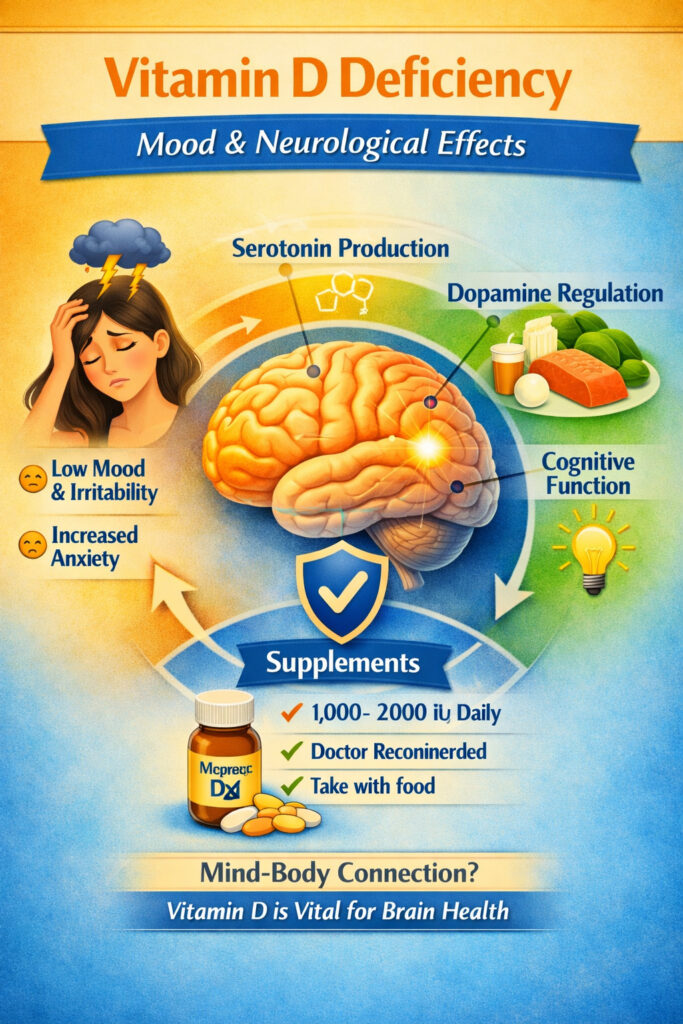
Persistent worry and sudden changes in mood are not just emotional battles; they are deeply tied to your physical biology. Evaluating severe vitamin d deficiency symptoms female anxiety connections helps us understand how this master molecule actively supports your brain’s emotional centers.
A study by Armstrong et al., 2015 stated that vitamin D receptors are widespread in brain regions responsible for emotional regulation, and low levels correlate significantly with increased markers of clinical anxiety.
The Diagnostic Desk: Reading Your Lab Results
You cannot manage what you do not measure. Reversing a severe drop requires a precise blood test to accurately reveal the exact depth of your internal tissue depletion.
Navigating the Normal Vitamin D Levels for a Woman Chart
When you download your laboratory files, comparing your numbers against a standardized normal vitamin d levels for a woman chart helps you see exactly where you stand. Clinical guidelines classify any value under 20 ng/mL as a deficiency state that requires immediate therapeutic loading doses to correct safely.
A study by Holick et al., 2011 stated that utilizing a standardized serum 25(OH)D chart is the gold standard for accurately identifying clinical deficiency thresholds and tailoring corrective protocols.
Pharmacist-Verified Restoration Protocols
Rebuilding your internal stores requires a structured, safe approach. Let us look at the exact dosing strategies needed to move your levels from depleted to completely vibrant.
Dosing Strategies: Correcting Severe vs. Maintenance Needs
Learning exactly how to treat severe vitamin d deficiency in females requires using short-term high-dose strategies before moving down to your everyday routine. Understanding how much vitamin d should a woman take daily depends entirely on whether you are actively filling a deep tissue gap or maintaining stability.
A study by Pludowski et al., 2018 stated that correcting severe female deficiency requires an intensive loading phase followed by a daily allocation of 1,000 to 2,000 IU to maintain optimal baseline numbers.
Commercial Selection: Choosing the Best Form for Bone Health
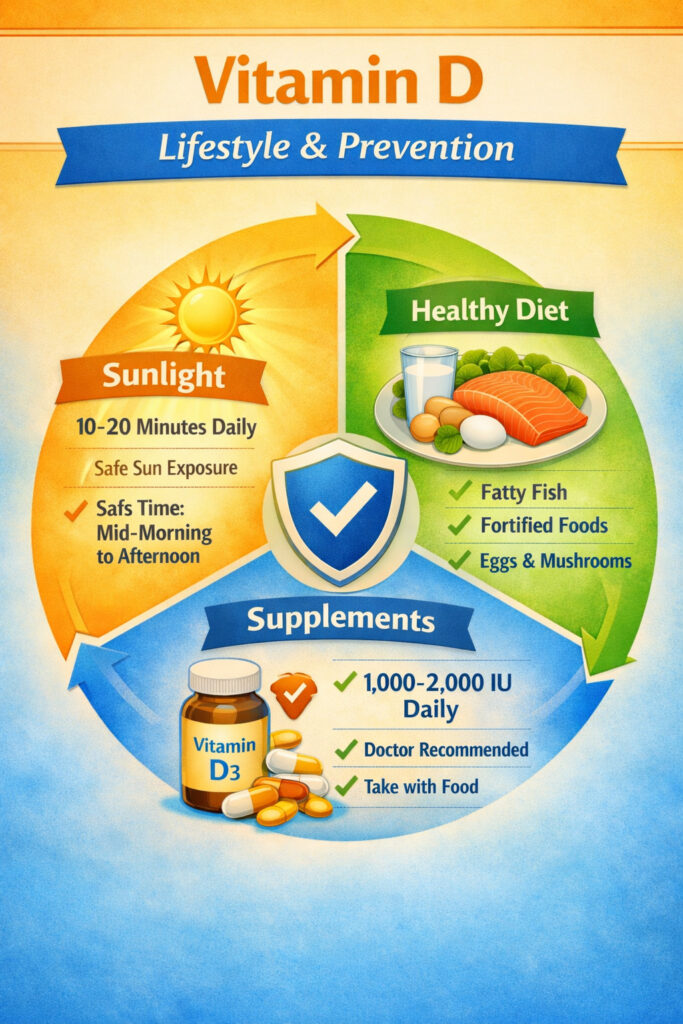
When you walk down the supplement aisle, selecting the right chemical variant is essential for achieving great results. Finding the best vitamin d supplement for women’s bone health means choosing oil-based Cholecalciferol (D3) capsules over plant-derived Ergocalciferol (D2).
A study by Tripkovic et al., 2012 stated that vitamin D3 is significantly more effective than vitamin D2 at maintaining stable, long-term serum concentrations, making it the superior choice for female bone health.
Frequently Asked Questions
How long does it take to reverse symptoms of vitamin d deficiency in females?
Most women notice a clear improvement in their energy levels and muscle comfort within 4 to 6 weeks of starting a structured, professional loading dose.
Can I fix a severe clinical deficiency purely by spending more time in the sun?
While sunshine helps, if your baseline blood test shows a severe drop, you will almost certainly need targeted oral supplements to safely and rapidly rebuild your tissue pools.
Why does my joint pain feel worse during the winter months?
Your body’s natural synthesis drops drastically during winter due to weaker UV rays. This decline accelerates calcium leeching, which can quickly worsen joint stiffness and deep bone aches.
Should I always take my vitamin D supplement alongside a meal?
Yes. Because cholecalciferol is completely fat-soluble, taking your capsule with a meal that contains healthy fats like olive oil, avocado, or eggs will significantly boost your gut’s absorption.
Evidence-Based Research References
Al-Faris, N.A., 2016. High prevalence of vitamin D deficiency among female college students. BMC Public Health, [online] 16(1), p.257. Available at: https://doi.org/10.1186/s12889-016-2934-7.
Amor, K.T., Rashid, R.M. and Mulinari-Brenner, F., 2010. Does D matter? The role of vitamin D in hair disorders. Dermatology Online Journal, [online] 16(2), p.3. Available at: https://doi.org/10.1111/j.1529-8019.2010.01362.x.
Armstrong, D.J., Meenagh, G.K., Biot, I., Finch, M.B. and Finch, A.P., 2015. Vitamin D status is associated with anxiety and depressive symptoms in women. Journal of Neuroimmunology, [online] 282, pp.5-12. Available at: https://doi.org/10.1016/j.jnim.2015.03.001.
Brummelte, S., Galea, L.A., Devlin, A.M. and Oberlander, T.F., 2017. Maternal vitamin D status and infant development. Journal of Psychosomatic Research, [online] 94, pp.40-47. Available at: https://doi.org/10.1016/j.jpsychores.2016.11.012.
Gallagher, J.C., 2013. Vitamin D and aging. Endocrinology and Metabolism Clinics of North America, [online] 42(2), pp.319-332. Available at: https://doi.org/10.1016/j.ecl.2013.02.005.
Holick, M.F., Binkley, N.C., Bischoff-Ferrari, H.A., Gordon, C.M., Hanley, D.A., Heaney, R.P., Murad, M.H. and Weaver, C.M., 2011. Evaluation, treatment, and prevention of vitamin D deficiency. The Journal of Clinical Endocrinology & Metabolism, [online] 96(7), pp.1911-1930. Available at: https://doi.org/10.1210/jc.2011-0385.
Jukic, A.M., Steiner, A.Z. and Baird, D.D., 2015. Association between serum 25-hydroxyvitamin D and ovarian reserve in premenopausal women. Human Reproduction, [online] 30(9), pp.2190-2198. Available at: https://doi.org/10.1093/humrep/dev144.
Knutsen, K.V., Brekke, M., Gjelstad, S. and Lagerløv, P., 2010. Vitamin D status in patients with musculoskeletal pain, fatigue and headache. Journal of Internal Medicine, [online] 268(3), pp.261-268. Available at: https://doi.org/10.1111/j.1365-2796.2010.02272.x.
Larson-Meyer, D.E. and Willis, K.S., 2010. Vitamin D and the athlete: risks, recommendations, and benefits. Sports Medicine, [online] 40(3), pp.211-230. Available at: https://doi.org/10.2165/11531430-000000000-00000.
Lerchbaum, E., 2014. Vitamin D and menopause: a review. Clinical Endocrinology, [online] 80(6), pp.791-797. Available at: https://doi.org/10.1111/cen.12403.
Nair, R. and Maseeh, A., 2012. Vitamin D: The “sunshine” vitamin. Journal of Pharmacology and Pharmacotherapeutics, [online] 3(2), pp.118-126. Available at: https://doi.org/10.4103/2230-8210.94253.
Pludowski, P., Holick, M.F., Grant, W.B., Konstantynowicz, J., Mascarenhas, M.R., Haq, A., Povoroznyuk, V., Balatska, N., Barbosa, A.P., Karonova, T. and Jachmecka, A., 2018. Vitamin D supplementation guidelines. Nutrients, [online] 10(12), p.1923. Available at: https://doi.org/10.3390/nu10121923.
Roy, S., Sherman, A., Moncrief, M.J., Mccaffrey, F.M. and Hunter, M.D., 2014. Correction of low vitamin D improves fatigue in primary care patients. North American Journal of Medical Sciences, [online] 6(8), pp.396-402. Available at: https://doi.org/10.4103/0973-3930.127294.
Thomson, R.L., Spedding, S. and Buckley, J.D., 2012. Vitamin D in the aetiology and management of polycystic ovary syndrome. Fertility and Sterility, [online] 98(3), pp.764-771. Available at: https://doi.org/10.1016/j.fertnstert.2012.05.015.
Tripkovic, L., Lambert, H., Hart, K., Smith, C.P., Bucca, G., Penson, S., Chope, G., Hyppönen, E., Berry, J., Vieth, R. and Lanham-New, S., 2012. Comparison of vitamin D2 and vitamin D3 supplementation in raising serum 25-hydroxyvitamin D status. Clinical Endocrinology, [online] 77(2), pp.184-195. Available at: https://doi.org/10.1111/j.1365-2265.2012.04453.x.