

Medically reviewed by Dr. Rao Khurram Ayoub, RPh, PhD (Pharmaceutics)
Updated on
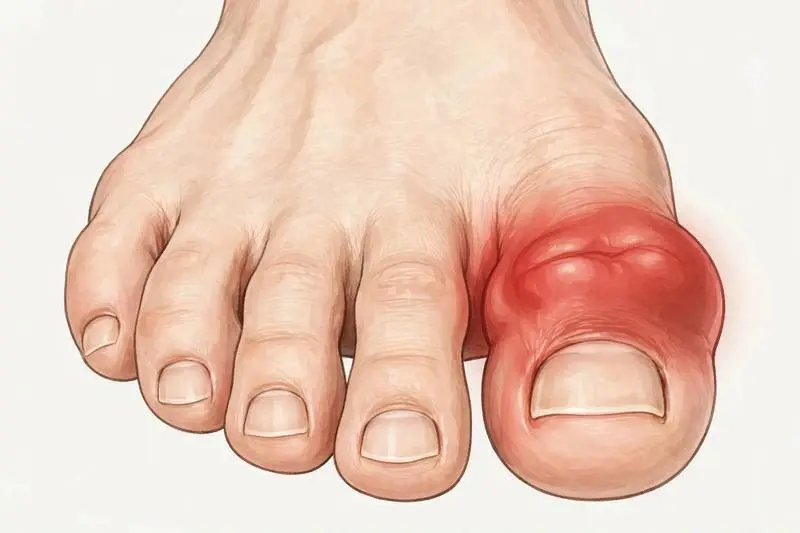
Figure 1: Classic gout flare – sudden, severe pain, swelling and redness in the big toe (podagra), often at night.
- Hour 0: Rest joint, ice 15 min, drink 2-3 glasses water, do NOT massage / walk on it
- Hour 0-24: Start flare medicine as prescribed – colchicine 1.2 mg at first sign, then 0.6 mg 1 hour later, OR NSAID with food, OR steroid if you cannot take NSAID / colchicine. Earlier = shorter flare.
- Day 1-3: Avoid alcohol, red meat, organ meat, sugary drinks. Keep joint elevated.
- Do NOT start allopurinol during flare unless your doctor says so – if you already take it, do NOT stop it during flare.
- See doctor urgently if: Hot red joint + fever, cannot move joint, flare >3 days, or first-ever flare – need to rule out septic arthritis.
What Is Gouty Arthritis? – MSU Crystals Explained
When uric acid stays high, it forms sharp needle-like MSU crystals in joints. Immune system attacks crystals → NLRP3 inflammasome → sudden inflammation. Crystals can also deposit in soft tissues → tophi (painless lumps on ear, elbow, fingers, Achilles tendon), and in kidneys → kidney stones.
3 causes of high uric acid: 1) Body makes too much (purine breakdown, fructose), 2) Kidneys excrete too little (kidney disease, diuretics), 3) Diet + alcohol overload (red meat, organ meat, seafood, beer, sugary drinks).
4 Stages of Gout – Asymptomatic → Acute → Intercritical → Chronic Tophaceous

Figure 2: 4 stages – 1) Asymptomatic hyperuricemia, 2) Acute flare, 3) Intercritical (quiet), 4) Chronic tophaceous gout with tophi.
| Stage | What Happens | What To Do |
|---|---|---|
| 1. Asymptomatic Hyperuricemia | Uric acid high, no pain. Most people never get gout. | No medicine needed unless tophi / kidney stones. Check urate, lifestyle. |
| 2. Acute Gouty Arthritis | Sudden severe pain, swelling, redness – often big toe at night. Lasts 3-10 days. | Flare plan above. Treat within 24 hours. |
| 3. Intercritical Gout | Quiet period between flares – weeks to years. Crystals still present. | Best time to start allopurinol, diet, check urate. |
| 4. Chronic Tophaceous Gout | Tophi, joint damage, deformity, chronic pain if untreated for years. | Urate target <5 mg/dL, long-term allopurinol, rheumatology. |
Gouty Arthritis Symptoms – Big Toe, Night Pain, Tophi
- Sudden severe pain: Often at night, peaks in 12-24 hours, even bedsheet touch hurts
- Big toe (Podagra): First joint in 50% of first flares – also ankle, knee, wrist, elbow, fingers
- Swelling, redness, warmth: Joint looks red, hot, shiny, swollen beyond joint
- Tophi: Painless chalky lumps – ear helix, elbow, fingers, Achilles – sign of chronic gout
- Kidney stones: Flank pain, blood in urine – uric acid stones
- Stiffness after flare: Joint stays tender for days after pain fades
Gout vs Pseudogout vs Septic Arthritis vs RA – Emergency Differential
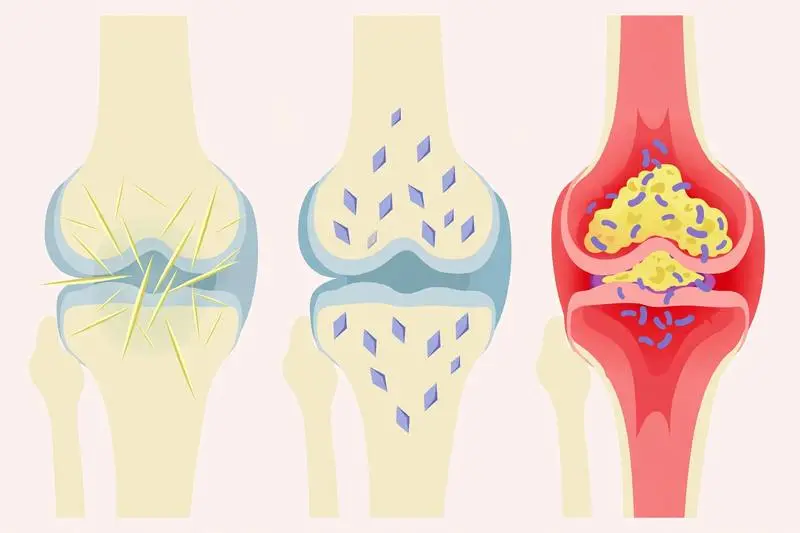
Figure 3: Gout = MSU needle crystals. Pseudogout = CPPD rhomboid crystals. Septic arthritis = bacteria + pus + fever = emergency.
| Gout | Pseudogout (CPPD) | Septic Arthritis | Rheumatoid Arthritis | |
|---|---|---|---|---|
| Crystal | MSU – needle, negative birefringence | Calcium pyrophosphate – rhomboid, positive | No crystal – bacteria | No crystal – autoimmune |
| Typical joint | Big toe, foot, ankle | Knee, wrist – older patient | Any joint, single | Hands, wrists – both sides |
| Onset | Sudden, night | Sudden | Sudden + fever | Gradual, weeks |
| Fever | Low / none | Low / none | High fever + hot joint = Emergency | Low fever, fatigue |
| Test | Joint aspiration – MSU crystals | Joint aspiration – CPPD crystals | Joint aspiration – pus, culture | RF, anti-CCP, CRP |
Causes & Risk Factors – Why Uric Acid Rises
- Diet: Red meat, organ meat (liver, kidney, kaleji), paya, nihari, shellfish, sardines, beer, spirits, sugary drinks / high-fructose corn syrup
- Alcohol: Beer worst – yeast + purines + blocks urate excretion. Wine less risky, but still avoid during flare.
- Obesity / Metabolic syndrome: High insulin reduces urate excretion
- Kidney disease: Less urate excretion → higher urate
- Medicines: Thiazide diuretics, loop diuretics, low-dose aspirin, cyclosporine, pyrazinamide
- Genetics / Age / Sex: Men >40, post-menopausal women, family history
- Dehydration / Surgery / Crash diet: Can trigger flare
Diagnosis – Serum Urate, Joint Aspiration, Ultrasound, DECT
- Serum urate: >6.8 mg/dL = hyperuricemia. Note: Urate can be normal during flare – do not rule out gout on urate alone. Recheck after flare.
- Joint aspiration (Gold Standard): Needle draws synovial fluid, microscope shows MSU crystals – also rules out septic arthritis
- Ultrasound: Double contour sign (MSU on cartilage), tophus, snowstorm – non-invasive
- Dual-Energy CT (DECT): Colour-codes urate deposits – best for tophi / deep joints
- X-ray: Normal early, erosions + tophi late
- 2015 ACR/EULAR Criteria: Pattern + crystals + urate + imaging = classification, not diagnosis alone
Gout Flare Treatment – Day 1-3 Plan (ACR 2020)
| Medicine | Dose (Typical – Doctor Prescribed) | Who Should Avoid |
|---|---|---|
| Colchicine (Low-dose) | 1.2 mg at first sign, then 0.6 mg 1 hour later. Then 0.6 mg 1-2x/day. | Kidney / liver disease, statin interaction – diarrhoea common |
| NSAIDs | Ibuprofen / Naproxen / Indomethacin – full dose with food, 2-3 days | Stomach ulcer, kidney disease, heart disease, blood thinners |
| Steroids | Prednisone 30-40 mg/day for 5 days, or joint injection | Diabetes, infection, high BP – monitor sugar |
Rule: Pick ONE of the three – do not combine colchicine + NSAID + steroid unless doctor says. Add ice 15 min, rest, water. Do NOT use allopurinol to treat a flare – it is for long-term prevention.
Long-Term Treatment – Allopurinol Titration, Target <6 mg/dL, Prophylaxis
| Step | What | Details |
|---|---|---|
| 1. Who needs ULT? | Urate-lowering therapy | ≥2 flares/year, OR tophi, OR joint damage on X-ray / ultrasound |
| 2. First-line | Allopurinol | Start low: 100 mg/day (50 mg if CKD ≥4), increase every 2-5 weeks until urate <6 mg/dL. Do NOT stay on fixed 100 mg. |
| 3. Target | Serum urate | ACR: <6 mg/dL (360 µmol/L) for all. EULAR: <5 mg/dL (300 µmol/L) for tophi / severe gout – dissolves tophi faster. |
| 4. Prophylaxis | Prevent flare when starting ULT | Colchicine 0.5-0.6 mg/day for at least 6 months – because urate drop can trigger flare in first 3-6 months |
| 5. Alternatives | If allopurinol fails / allergy | Febuxostat (check heart history), Probenecid (if kidney OK), Pegloticase (severe tophaceous, specialist only) |
HLA-B*5801 screening: Test before allopurinol if you are of Southeast Asian / African American descent – higher risk of severe skin reaction (SJS). Do NOT stop allopurinol during flare – stopping causes urate rebound.
Foods To Avoid / Eat – Purine Table + Pakistan Foods

Figure 4: Avoid – red / organ meat, shellfish, beer, sugary soda. Eat – water, cherries, low-fat yogurt, vegetables, lentils.
| Avoid / Limit | Eat More |
|---|---|
| Organ meats: kaleji, gurda, paya, brain. Red meat: beef, mutton, nihari, haleem (limit). Shellfish, sardines, anchovies. Beer, spirits, sugary drinks, fruit juice, high-fructose corn syrup. | Water 2-3 L/day, low-fat milk / yogurt, cherries, vitamin C foods, vegetables, whole grains, lentils (dal – moderate, NOT high purine), chicken (moderate portion), coffee (moderate). |
Is dal / spinach / tomato bad for gout? No – plant purines do NOT raise gout risk like animal purines. Dal, spinach, tomato are safe in normal portions. Is chicken bad? Moderate – 100-150g portion, not daily large portions. Use Purine & Oxalate Calculator to check your meal.
Gout & Kidney Disease / Medicines That Raise Uric Acid
- Kidney disease: Both cause and result of gout – urate stones, CKD. Allopurinol still first-line in CKD, start lower.
- Diuretics: Thiazide / furosemide raise urate – ask doctor if alternative exists, do NOT stop BP medicine yourself
- Low-dose aspirin: Raises urate slightly – do NOT stop if prescribed for heart, discuss with doctor
- Check: Blood pressure, sugar, cholesterol, kidney function (eGFR), urate every 3-6 months on ULT
Can Gout Be Cured? / How Long Does Flare Last?
Can gout be cured permanently? No cure, but it can be controlled – urate <6 mg/dL for months dissolves crystals, tophi shrink, flares stop. Stopping allopurinol usually causes urate to rise again. How long does flare last? Untreated 7-10 days, treated 2-3 days. Peak pain in 12-24 hours. Can gout happen without high uric acid? Yes – urate can be normal during flare, crystals are already in joint.
FAQ – Gouty Arthritis
Is gouty arthritis same as gout?
Yes – gouty arthritis is the joint inflammation caused by gout. Gout = disease, gouty arthritis = joint attack.
What is the fastest way to stop gout pain?
Start colchicine / NSAID / steroid within 24 hours, rest, ice, water, avoid alcohol / meat. Earlier = shorter flare.
How to lower uric acid quickly?
No safe instant drop – drink water, avoid alcohol / fructose / red meat, take flare medicine as prescribed. Long-term drop needs allopurinol titration over weeks.
What is normal uric acid range?
Men: 3.4-7.0 mg/dL, Women: 2.4-6.0 mg/dL. >6.8 mg/dL = hyperuricemia (crystals can form). Target on treatment: <6 mg/dL.
Why does allopurinol cause flare after starting?
Urate drop dissolves tophi, crystals mobilize, triggers flare. This is normal – take prophylaxis colchicine for 6 months, do NOT stop allopurinol.
What foods cause gout flare in Pakistan?
Organ meats (kaleji, paya), nihari, red meat, shellfish, beer, sugary drinks (【entity-Pepsi¦canonical_name=Pepsi】, Rooh Afza with sugar), heavy wedding meals + dehydration.
Can gout affect other joints besides big toe?
Yes – ankle, knee, wrist, elbow, fingers. Big toe is first in 50%, but later flares can hit any joint.
Is gout hereditary?
Yes, partly – family history + diet + kidney function decide risk. If parents have gout, check urate yearly.
References
- FitzGerald, J. D., Dalbeth, N., Mikuls, T., et al. (2020). 2020 American College of Rheumatology Guideline for the Management of Gout. Arthritis Care & Research, 72(6), 744–760. https://doi.org/10.1002/acr.24180
- Zeng, S., He, Q., Wang, R., et al. (2026). Gouty arthritis model: delving into disease pathways and uncovering possible therapeutic targets. Frontiers in Endocrinology, 17, 1752411. https://doi.org/10.3389/fendo.2026.1752411
- Onuora, S. (2026). Novel approach mitigates immunogenicity of uricase treatment in gout. Nature Reviews Rheumatology, 22(3). https://doi.org/10.1038/s41584-026-01360-y
- Karacabeyli, D., & Lacaille, D. (2025). Glucagon-like peptide-1 receptor agonists in arthritis: current insights and future directions. Nature Reviews Rheumatology, 21(11), 671–683. https://doi.org/10.1038/s41584-025-01302-0
- Ea, H. K., & Richette, P. (2025). Factors beyond urate levels for managing gout flares. Nature Reviews Rheumatology, 21(7), 371–372. https://doi.org/10.1038/s41584-025-01255-4
- Gérard, B., Leask, M., Merriman, T. R., et al. (2025). Hyperuricaemia and gout in the Pacific: genetic, clinical and cultural aspects. Nature Reviews Rheumatology, 21(4). https://doi.org/10.1038/s41584-025-01228-7
- Chen, S., Li, Z., Deng, X., & Gao, L. (2025). Advances in understanding the mechanisms of treatment for gouty arthritis: A comprehensive review. Physiological Research, 74(5), 693–710. https://doi.org/10.33549/physiolres.935631
- Kłossowska, M., Ordon, K., Badziąg, M., et al. (2025). Understanding gout: A review of pathophysiology, diagnosis and management. Archiv EuroMedica, 15(5). https://doi.org/10.35630/2025/15/Iss.5.505
- Gonzalez, R. P., & Guma, M. (2025). Year in Review: Advances in Research in Gout Pathophysiology in 2024. Gout, Urate, and Crystal Deposition Disease, 3(3), 15. https://doi.org/10.3390/gucdd3030015
- Webster, H. (2024). Macrophage-coated nanocarriers for gouty arthritis. Nature Reviews Rheumatology, 20(10), 597. https://doi.org/10.1038/s41584-024-01161-1
- Leask, M. P., Crișan, T. O., & Merriman, T. R. (2024). The pathogenesis of gout: molecular insights from genetic, epigenomic and transcriptomic studies. Nature Reviews Rheumatology, 20(8), 510–523. https://doi.org/10.1038/s41584-024-01137-1
- Mayo Clinic. Gout – Symptoms and Causes. mayoclinic.org
Author: Dr. Muhammad Imran, Pharm.D (Rph) | Reviewed by Dr. Rao Khurram Ayoub PhD | Updated: Nov 2026 | Educational only, not medical advice