


Medically reviewed by Dr. Rao Khurram Ayoub, RPh, PhD (Pharmaceutics)
Written by Dr. Muhammad Imran, M.Phil, PharmD, BSc
Updated on
Introduction :Why Asthma Medications Matter
List of asthma medications can feel confusing, especially when choosing the right inhaler or treatment.
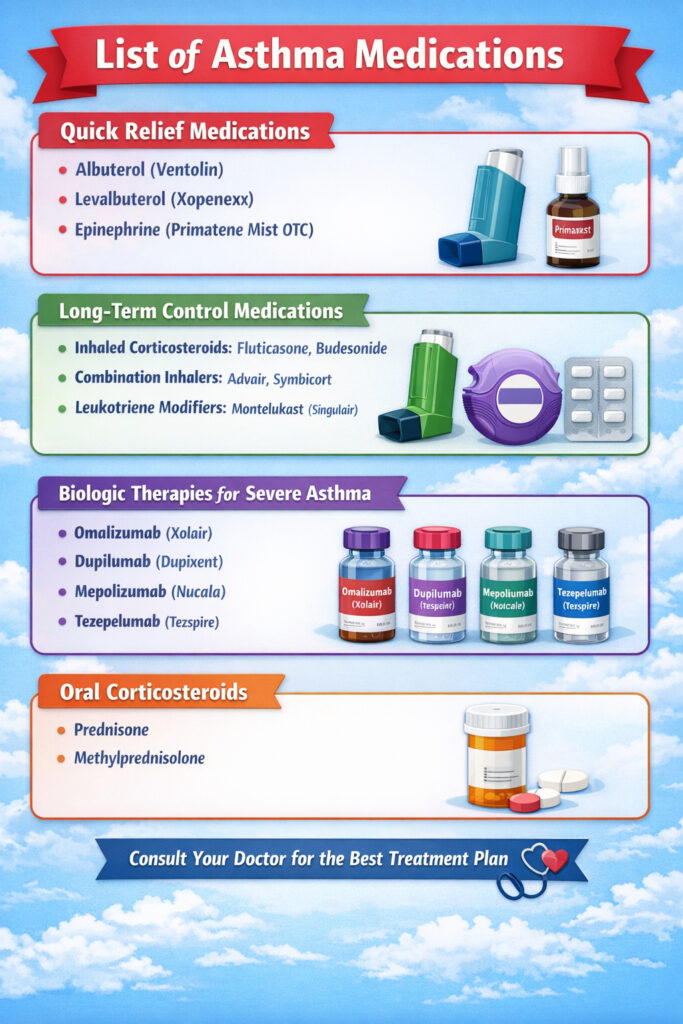
Asthma medicines fall into two main groups:
- Quick-relief medicines that open the airways fast and long-term control medicines that reduce inflammation and prevent attacks. Most are inhaled, so they work directly in the lungs with fewer side effects.
Modern guidelines use a stepwise, personalised approach, meaning treatment depends on symptom control and severity. This includes a wide list of approved asthma medications such as inhaled corticosteroids, bronchodilators, leukotriene modifiers, and biologics.
Approved asthma medications are conventionally categorized into two functional groupsrelievers and controllers in line with global guidance from the Global Initiative for Asthma (GINA).
- Relievers: quick symptom relief
- Controllers: long-term inflammation control
Relievers act fast. For example, Salbutamol opens airways within minutes, making it essential during an asthma attack.
Controllers work differently. Inhaled corticosteroids like Budesonide and Fluticasone reduce airway inflammation over time.
GINA’s current strategy separates asthma treatment into reliever and controller roles and recommends that all adults and adolescents with asthma use inhaled corticosteroid containing therapy rather than relying only on short‑acting beta agonist relievers. This two‑group approach to explaining asthma medications therefore follows major international guidelines.
Rescue (Quick-Relief) Asthma Medications
Short-Acting Beta Agonists (SABAs)
Rescue inhalers are usually the first thing people think of in an asthma inhalers list. Short-acting beta-agonists (SABAs) like Salbutamol (Ventolin) and Levalbuterol work within minutes to relax airway muscles and quickly relieve symptoms.
I always remind patients that these are for quick relief, not daily prevention. Using them more than twice a week often signals poor asthma control and the need to review long term treatment, as recommended by Global Initiative for Asthma.
Anticholinergics
According to the Asthma Guidelines by British Thoracic Society (2024): When SABAs aren’t enough, anticholinergics like Ipratropium bromide (Atrovent HFA) can help. They work by blocking nerve signals that tighten the airways and are often used in emergencies or combined with salbutamol in nebulisers.
Patients often ask about alternatives. Ipratropium is one option, especially during severe flare-ups or if SABAs aren’t well tolerated. It works a bit slower but can provide extra relief when used together.
Controller (Long-Term) Asthma Medications
Controller medications are the backbone of asthma care. Unlike rescue inhalers, these drugs are taken daily to keep inflammation under control and prevent flare‑ups. When patients search for a list of asthma medications, they often want to know which ones are safe for children, which are approved internationally, and whether any can be used during pregnancy.
Inhaled Corticosteroids (ICS)
Inhaled corticosteroids (ICS) are the most effective long-term treatment for asthma. Common options include Fluticasone, Budesonide, and Beclometasone. These inhalers reduce airway inflammation and prevent exacerbations.
Low-dose ICS are safe for long-term use, including in children. The most common side effect is oral thrush, which can be minimised by rinsing the mouth after use. During pregnancy, budesonide is the preferred option due to its established safety profile (GINA, 2025).
Leukotriene Modifiers
Leukotriene modifiers are oral tablets that block leukotrienes, which are inflammatory chemicals. The most common is montelukast (Singulair), available in chewable form for children. Parents often ask about non‑inhaler options for kids, and montelukast is one of the few oral asthma medicines for children; it is especially helpful for those who have trouble using inhalers. However, recent studies suggest possible behavioural side effects, so careful monitoring is recommended (FDA, 2025).
Combination Inhalers
Combination inhalers bring together ICS and LABAs in one device. Popular options include Advair, Symbicort, and Breztri Aerosphere (FDA 2026 approval). These inhalers simplify treatment by reducing the number of devices patients need to use.
Patients often ask: “Why combine ICS + LABA?” The answer is simple: ICS reduce inflammation, while LABAs keep airways open. Together, they provide stronger control and fewer flare‑ups. For children, combination inhalers are used cautiously, but for adults they are often the mainstay of therapy.
Biologics for Severe Asthma
Biologics are the newest class of asthma medications, designed for people whose condition isn’t controlled by inhalers alone. When patients search for a list of approved asthma medications, biologics often come up because they target specific immune pathways. These treatments are given by injection or infusion, usually every few weeks, and are reserved for severe asthma.
Monoclonal Antibodies
Several biologics are now approved internationally and listed in the Global Initiative for Asthma (GINA) 2025 and European Medicines Agency (EMA) databases as approved treatments for severe asthma :
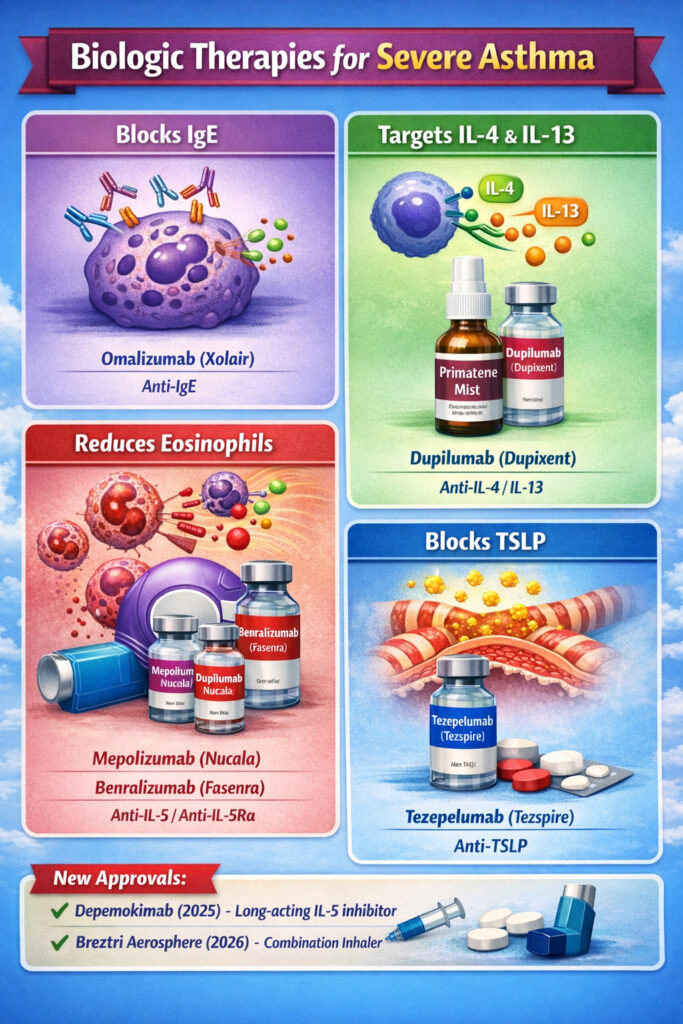
Omalizumab (Xolair) :for allergic asthma, works by blocking IgE antibodies.
Dupilumab (Dupixent) : reduces inflammation by targeting IL‑4 and IL‑13 pathways.
Mepolizumab (Nucala) and Benralizumab (Fasenra) : both target eosinophils, a type of white blood cell linked to severe asthma.
Tezepelumab (Tezspire) : approved in recent years, blocks thymic stromal lymphopoietin (TSLP), a key driver of airway inflammation.
In 2025, Depemokimab was approved as a long‑acting biologic, offering dosing every six months. In 2026, Breztri Aerosphere gained approval for severe asthma, expanding combination therapy options. These additions strengthen the list of approved asthma medications and provide new hope for patients with uncontrolled symptoms.
Patients often ask: “Are biologics safe during pregnancy?” Current evidence is limited, but guidelines recommend caution. Most biologics are not first‑line in pregnancy, with inhaled corticosteroids remaining the preferred option (GINA, 2025). For children, biologics like dupilumab and mepolizumab are approved in certain age groups, but paediatric use is carefully monitored.
Biologics are not available over the counter. They require specialist assessment, prescription, and monitoring. For patients with frequent hospital visits or steroid dependence, biologics can transform quality of life by reducing exacerbations and improving lung function.
Oral Corticosteroids
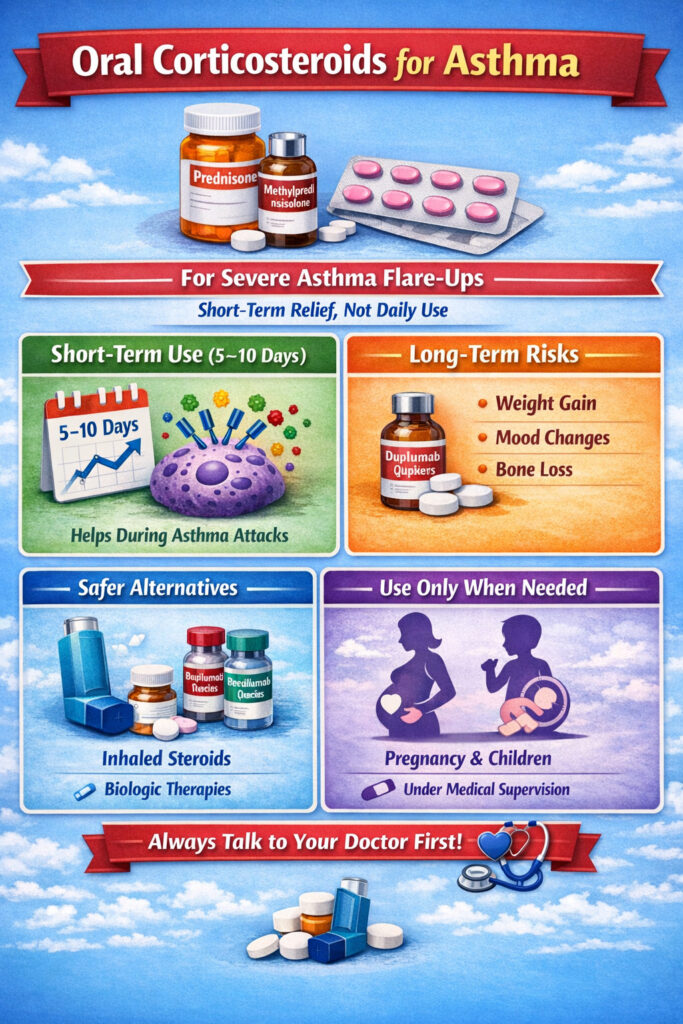
Oral corticosteroids are powerful asthma medications used when inhalers aren’t enough. Common brand names include Prednisone and Methylprednisolone, which are often prescribed during severe flare‑ups or hospital admissions. When patients search for a list of asthma medications, these tablets usually appear under “short‑term rescue options” rather than daily treatments.
I often explain to patients that oral steroids are not meant for long‑term use (NICE & NIH Guidelines). They work by calming inflammation quickly, but side effects like weight gain, mood changes, and bone thinning make them unsuitable for daily control. Instead, they’re used as a “burst” therapy typically for 5–10 days to get asthma back under control after a serious attack.
Parents sometimes ask: “Are oral steroids safe for children?” Yes, but only for short courses under medical supervision. Paediatric guidelines emphasise that inhaled corticosteroids remain the preferred daily option, with oral steroids reserved for emergencies. Pregnant women also ask: “Can I take oral steroids if I have a severe attack?” The answer is yes, but only if absolutely necessary. Inhaled therapies are safer, but oral steroids may be used when the benefits outweigh the risks (GINA, 2025).
Oral corticosteroids are prescription‑only and not available over the counter. They are part of the approved asthma medications list worldwide, but clinicians use them cautiously. For patients who rely on frequent steroid courses, biologics or combination inhalers may be recommended instead.
Asthma Medications by Population
Asthma treatment isn’t one‑size‑fits‑all. Children and pregnant women often need special consideration when choosing from the list of approved asthma medications. Parents and expectant mothers frequently ask: “Which asthma medications are safe for kids?” or “Which asthma medications are safe during pregnancy?” Let’s break it down clearly.
Asthma Medications for Children
Children with asthma need medications that are both effective and easy to use. Inhaled corticosteroids (ICS) such as Fluticasone and Budesonide are commonly prescribed, often in lower doses than adults. For younger children, Montelukast (Singulair) is available in chewable tablets, making it easier to take.
Parents often ask: “Are inhalers safe for daily use in kids?” Yes — guidelines confirm that daily ICS are safe and effective when monitored properly. The main concern is growth suppression, but studies show this effect is minimal and outweighed by the benefits of good asthma control (GINA, 2025).
Children may also use combination inhalers like Symbicort if symptoms are severe, but these are prescribed cautiously. Nebulisers are another option for very young children who struggle with inhaler technique.
Asthma Medications and Pregnancy
Pregnancy raises unique concerns about asthma medications. The safest and most studied option is Budesonide, an inhaled corticosteroid. It’s widely recommended as the first‑line controller medication during pregnancy. Rescue inhalers like Albuterol (Salbutamol) are also considered safe for quick relief.(American College of Obstetricians and Gynecologists (2024)
Expectant mothers often ask: “Can I keep using my inhaler while pregnant?” The answer is yes — uncontrolled asthma poses greater risks to both mother and baby than the medications themselves. Oral corticosteroids may be used in emergencies, but they’re not preferred for routine care.
Biologics such as Dupilumab and Omalizumab have limited pregnancy data, so they’re generally avoided unless benefits clearly outweigh risks. The focus remains on inhaled therapies, which are proven safe and effective.
Prescription vs Over-the-Counter
Most asthma medications, including inhaled corticosteroids, LABAs, and biologics, are prescription‑only. This is because they require careful monitoring and dose adjustment. However, there are a few exceptions. In the USA, Primatene Mist is an over‑the‑counter (OTC) inhaler containing epinephrine. It’s marketed for mild asthma symptoms, but guidelines caution against relying on it for long‑term control.
Patients often search for “asthma medications over the counter” hoping for easy access. The reality is that OTC options are limited and not recommended for children or pregnancy. In the UK and EU, all asthma inhalers remain prescription‑only, reflecting stricter safety standards.
Regulatory Approval Lists
When patients look for a “list of approved asthma medications”, they’re often reassured by knowing their inhaler or tablet is backed by regulators. In the USA, the FDA maintains updated lists of approved asthma drugs, including brand names like Ventolin, Symbicort, Advair, and Dupixent. In Europe, the EMA provides similar approvals, while the UK relies on the MHRA.
These lists matter because they confirm safety, efficacy, and manufacturing standards. For example, biologics such as Tezepelumab (Tezspire) and Dupilumab (Dupixent) were added to the FDA and EMA approved lists in recent years (2025–2026). Patients searching for “asthma medications list brand names” can find these in official databases, ensuring they’re using trusted therapies.
Asthma Inhalers
When patients search for an asthma medications inhalers list, they’re usually looking for practical device options. Inhalers are the most common way to deliver asthma medications because they act directly in the lungs. Choosing the right inhaler depends on age, technique, and severity of symptoms.
Metered-Dose Inhalers (MDIs)
MDIs are the classic “puff inhalers” that release a measured dose of medicine. Popular brand names include Ventolin (albuterol/salbutamol), Flovent (fluticasone), and Qvar (beclomethasone). They’re widely used for both rescue and controller medications.(NIH)
Patients often ask: “How do I use my inhaler properly?” Using a spacer device can make MDIs easier, especially for children. Spacers help deliver more medicine to the lungs and reduce side effects like oral thrush.
Dry Powder Inhalers (DPIs)
DPIs release medication when you breathe in deeply. They don’t require pressing a canister, which makes them easier for some patients. Common examples include Advair Diskus (fluticasone + salmeterol) and Symbicort Turbuhaler (budesonide + formoterol).
Patients often ask: “Which inhaler type is best for me?” DPIs are great for adults and older children who can generate a strong breath. However, they may not be suitable for very young children or those with severe asthma attacks, where quick relief is needed.
Nebulisers
Nebulisers turn liquid medicine into a fine mist that’s inhaled through a mask or mouthpiece. They’re often used in hospitals or at home for children and patients with severe asthma. Common medications delivered this way include albuterol, ipratropium, and budesonide.
Parents often ask: “Are nebulisers better for kids?” Nebulisers can be easier for young children who struggle with inhalers, but they’re not always necessary. For daily use, inhalers are more convenient and portable. Nebulisers are usually reserved for emergencies or severe cases.
Safety, Side Effects, and Monitoring
Patients often ask: “Are asthma medications safe long‑term?” The answer is yes — when used correctly, most inhalers and tablets are safe and effective. However, every medication carries potential side effects, and knowing how to manage them is part of good asthma care.
Common Side Effects
Inhaled corticosteroids (ICS): oral thrush, hoarse voice. Rinsing your mouth after use reduces risk.
LABAs: tremors, palpitations. These are mild and often settle with continued use.
Leukotriene modifiers (Montelukast): behavioural changes in rare cases, especially in children.
Oral corticosteroids: weight gain, mood swings, bone thinning if used long‑term.
Biologics: injection site reactions, headache, rare allergic responses.
Patients often search for “asthma medications for children” or “asthma medications and pregnancy” because they worry about safety. For children, ICS at low doses are safe and effective. For pregnancy, budesonide remains the preferred option, with rescue inhalers like salbutamol considered safe.
Monitoring and Safety Checks
Doctors recommend regular monitoring to ensure asthma medications are working properly. This includes:
Lung function tests (spirometry or peak flow) every few months.
Symptom diaries to track rescue inhaler use.
Growth monitoring in children on long‑term ICS.
Blood tests for patients on biologics or frequent oral steroids.
Patients often ask: “How can I reduce side effects?” Practical tips include using a spacer with inhalers, rinsing the mouth after ICS, and sticking to prescribed doses. For biologics, regular follow‑up visits ensure early detection of any issues.
Safety in Special Groups
Children: ICS and montelukast are safe, but monitoring growth is important.
Pregnancy: budesonide and salbutamol are preferred; oral steroids used only if necessary.
Older adults: careful monitoring for osteoporosis when using steroids.
These safety measures are part of the list of approved asthma medications guidelines from regulators like the FDA, EMA, and GINA.
FAQ'S Asthma Medications
What is the safest asthma medication during pregnancy?
The safest option is Budesonide, an inhaled corticosteroid with the strongest safety record in pregnancy. Rescue inhalers like Salbutamol (Ventolin) are also considered safe. Oral corticosteroids may be used in emergencies, but inhaled therapies remain the preferred choice.
Can children use inhaled corticosteroids daily?
Yes : low‑dose inhaled corticosteroids (ICS) are safe and effective for children. Growth monitoring is recommended, but studies show the benefits of good asthma control outweigh minimal growth effects. Chewable Montelukast (Singulair) is another option for kids who struggle with inhalers.
Are there any over-the-counter asthma medications?
In the USA, Primatene Mist is an OTC inhaler containing epinephrine. However, it’s not recommended for long‑term control and is unsuitable for children or pregnancy. In the UK and EU, all asthma medications remain prescription‑only. (Singulair) is another option for kids who struggle with inhalers.
What are the newest biologics for asthma?
Recent approvals include Tezepelumab (Tezspire), which blocks TSLP, and Depemokimab (2025), a long‑acting biologic dosed every six months. These add to the list of approved biologics like Omalizumab, Dupilumab, Mepolizumab, and Benralizumab.
How do rescue inhalers differ from controller inhalers?
Rescue inhalers (e.g., Ventolin, ProAir) provide quick relief during an asthma attack. Controller inhalers (e.g., Flovent, Symbicort) are taken daily to prevent symptoms and reduce inflammation. Using both correctly ensures long‑term control and fewer flare‑ups.