

Medically reviewed by Dr. Rao Khurram Ayoub, RPh, PhD (Pharmaceutics)
Written by Dr. Muhammad Imran, M.Phil, PharmD, BSc
Updated on
Table of Contents
Why Safety Matters in Long Term Pain Management
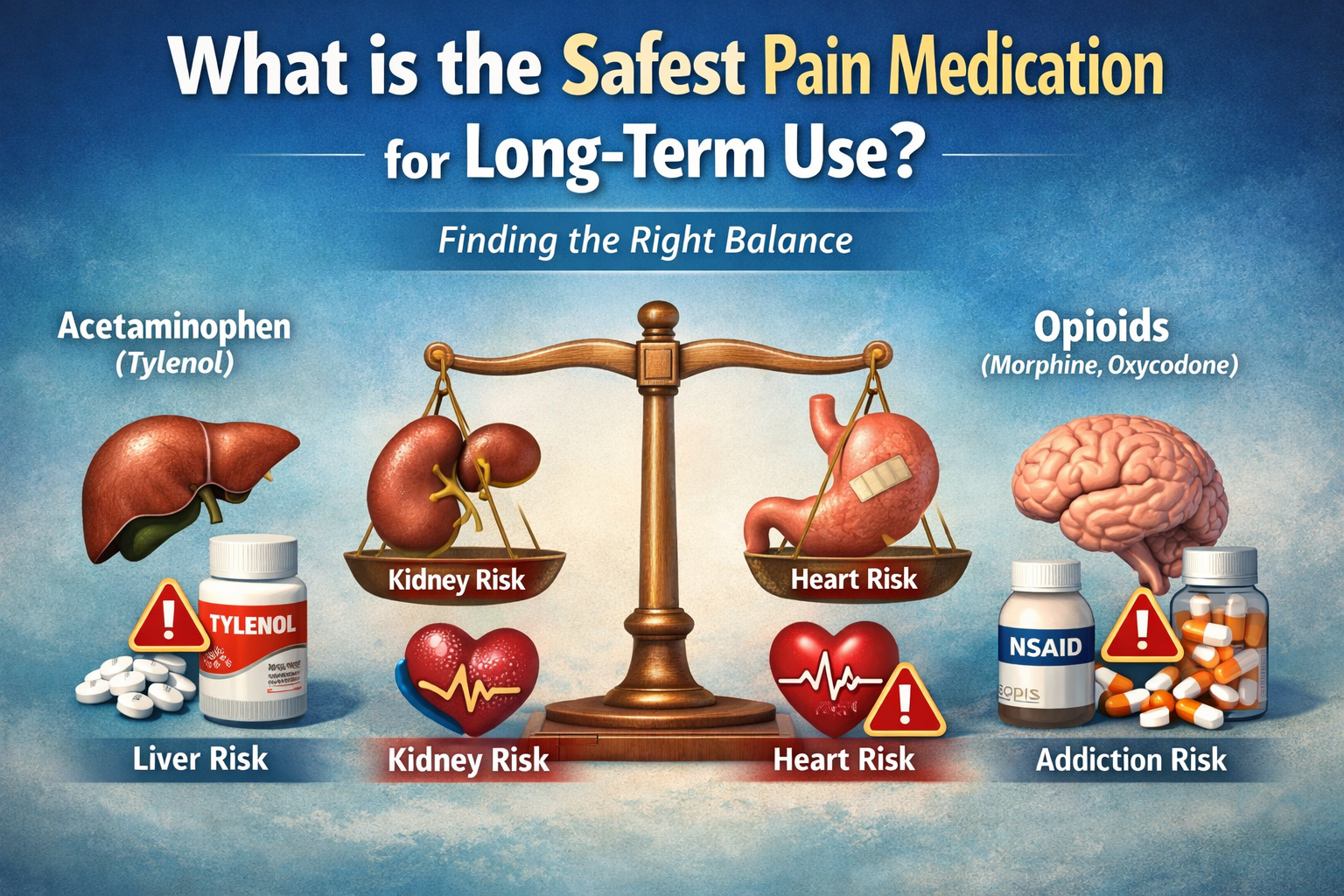
what is the safest pain medication for long term use?
The safest option for most people is acetaminophen (paracetamol), provided it’s taken within recommended doses, as it avoids stomach, kidney, and heart risks linked to NSAIDs.
However, high doses or prolonged use can harm the liver. NSAIDs like ibuprofen or naproxen may help with inflammation but carry long-term risks for the gut, kidneys, and heart.
Opioids, while powerful, are rarely safe for chronic use because of dependence and tolerance.
In short, acetaminophen is generally the safest daily choice, but the “right” medication depends on your health conditions and should always be guided by medical advice.
Comparing Liver, Kidney, and Heart Risks in Chronic Relief
Every pain pill makes the body “pay a price.” Paracetamol (acetaminophen) is gentle on the stomach but stresses the liver, while NSAIDs like ibuprofen or naproxen ease inflammation yet strain the kidneys and raise risks for stomach ulcers and heart problems.
As a pharmacist, my advice is simple:
If you have liver concerns or drink alcohol regularly, keep paracetamol doses low and monitored.
If you have heart disease, high blood pressure, or kidney issues, avoid long term NSAIDs.
Always match the medicine to your health profile it’s about choosing the “passenger” your body can carry safely.
Recent research in StatPearls (2025) states that hepatotoxicity is the major risk factor for long-term acetaminophen users, NSAIDs carry serious ‘red flags’ for kidney health and heart safety that simply can’t be ignored in a long-term pain management plan.
Acetaminophen (Paracetamol): First Line Option for Long Term Pain Relief
Benefits of Acetaminophen for Chronic Pain
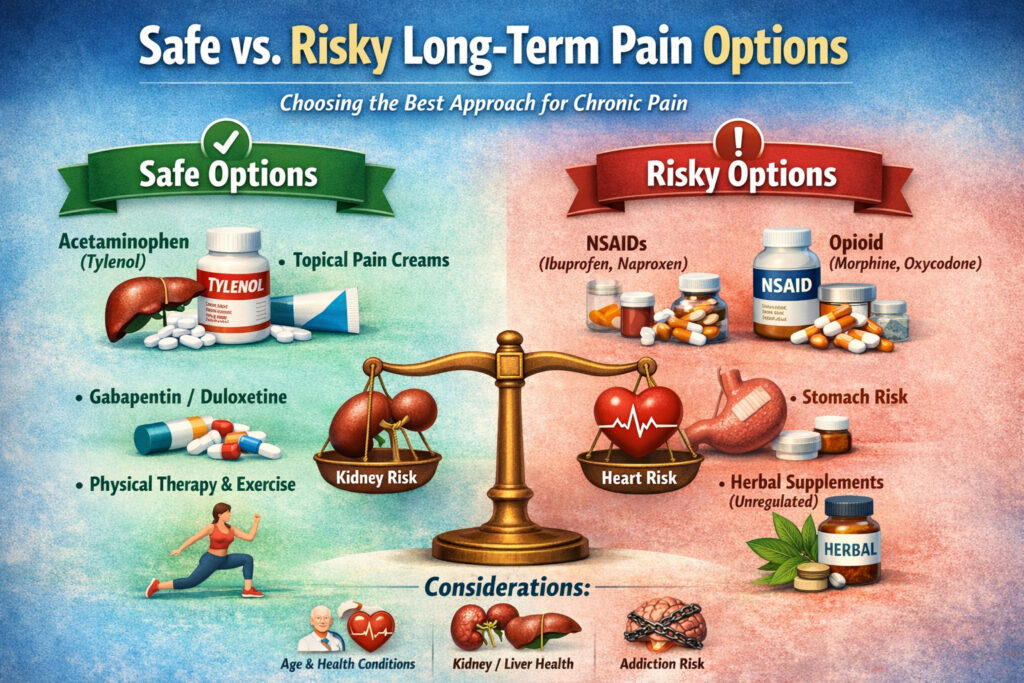
Acetaminophen (paracetamol) is often the first line recommendation for long-term pain relief. It’s widely available, inexpensive, and generally safe when taken at recommended doses. Unlike NSAIDs, it doesn’t irritate the stomach or increase cardiovascular risk, making it suitable for older adults and those with heart disease.
American College of Rheumatology guidelines (2019), acetaminophen remains a first-line option for mild to moderate arthritis pain.
Risks and Limitations of Acetaminophen
The main concern with acetaminophen is liver toxicity. Long-term use above 3–4 grams per day can cause serious liver damage, especially in people who drink alcohol regularly or have pre-existing liver disease.
Recent insights from Yale Medicine (2025) remind us that while acetaminophen is a “first-line” safe option, regular use can actually raise blood pressure in those with hypertension
NSAIDs : Balancing Relief with Risks
Effectiveness of NSAIDs in Long Term Pain
If your pain involves inflammation (like a swollen knee or rheumatoid arthritis), acetaminophen often feels like a “sugar pill.” You need an NSAID. But using these for more than 10 days at a time enters the “complex zone.” These drugs block COX-1 and COX-2 enzymes, which effectively kills the pain but also shuts down the body’s natural “protective shield” for the gut and heart.
NSAIDs like ibuprofen, naproxen, and diclofenac are highly effective for pain linked to inflammation, such as arthritis or musculoskeletal injuries. They reduce swelling and stiffness, making daily activities easier.
Risks of Long-Term NSAID Use
Long term NSAID use can cause stomach ulcers, gastrointestinal bleeding, kidney damage, and increase the risk of heart attacks or strokes. A Study in International Journal of Environmental Research & Public Health 2022 highlighted that chronic NSAID use doubles the risk of GI bleeding in older adults
Naproxen vs. Ibuprofen: The Cardiovascular Profile
When choosing between antacid tablets for pregnancy or general chronic use, the cardiovascular profile is key. Clinical consensus often points to Naproxen as having a slightly better safety profile for the heart compared to high-dose Ibuprofen, though it’s tougher on the stomach. According to the Mayo Clinic (2025), NSAIDs carry a “ceiling effect”taking more won’t help the pain but will drastically increase the risk of gastrointestinal bleeding .
The Role of Topical NSAIDs: Local vs. Systemic Relief
If your pain is in a specific joint, why swallow a pill that affects your whole body? Topical NSAIDs (like Diclofenac gel) provide high concentrations of the drug at the site of pain with minimal systemic absorption. A 2024 meta-analysis in PMC confirmed that topical formulations provide equivalent pain relief to oral versions for osteoarthritis but with a fraction of the side effects . For many, this is the true safest pain medication for long-term use.
Opioids :Rarely the Safest Choice
Why Opioids Are Risky for Long Term Use
Opioids like morphine, oxycodone, and fentanyl are powerful painkillers, but they’re rarely considered safe for long-term use. Dependence, tolerance, and risk of overdose make them unsuitable for chronic conditions like arthritis or back pain.
A 2023 JAMA study found that long-term opioid therapy did not improve function in chronic pain patients compared to non opioid alternatives, but significantly increased risks of dependence
When Opioids May Be Necessary
That said, opioids may be appropriate in certain cases, such as cancer related pain or palliative care, where quality of life is the priority. Even then, they require strict medical supervision.
Beyond the Pill: Non Opioid Alternatives for Nerve & Joint Pain
Antidepressants and Anticonvulsants
Medications like duloxetine (an antidepressant) and gabapentin (an anticonvulsant) are increasingly used for chronic pain conditions such as fibromyalgia and neuropathic pain. They work by quieting overactive nerve signals.They don’t carry the same risks as opioids or NSAIDs, though side effects like dizziness or fatigue can occur.
The SIGN Guidelines (2025) strongly recommend these for chronic pain as they don’t carry the same organ-toxicity risks as high-dose NSAIDs
FAQ'S safest pain medication for long term use
Can I take Tylenol every day for 10 years?
Technically, yes, if monitored by a doctor, but you must stay under the 3g–4g limit and avoid alcohol to prevent liver stress.
What is the best topical antacid for chronic NSAID users?
Actually, we don’t use “topical antacids“; we use PPIs (Proportion Pump Inhibitors) like Omeprazole orally to protect the stomach if you must take NSAIDs long-term.
Are there any non addictive pain medications?
Yes, Acetaminophen, NSAIDs, and SNRIs like Duloxetine are all non-addictive.